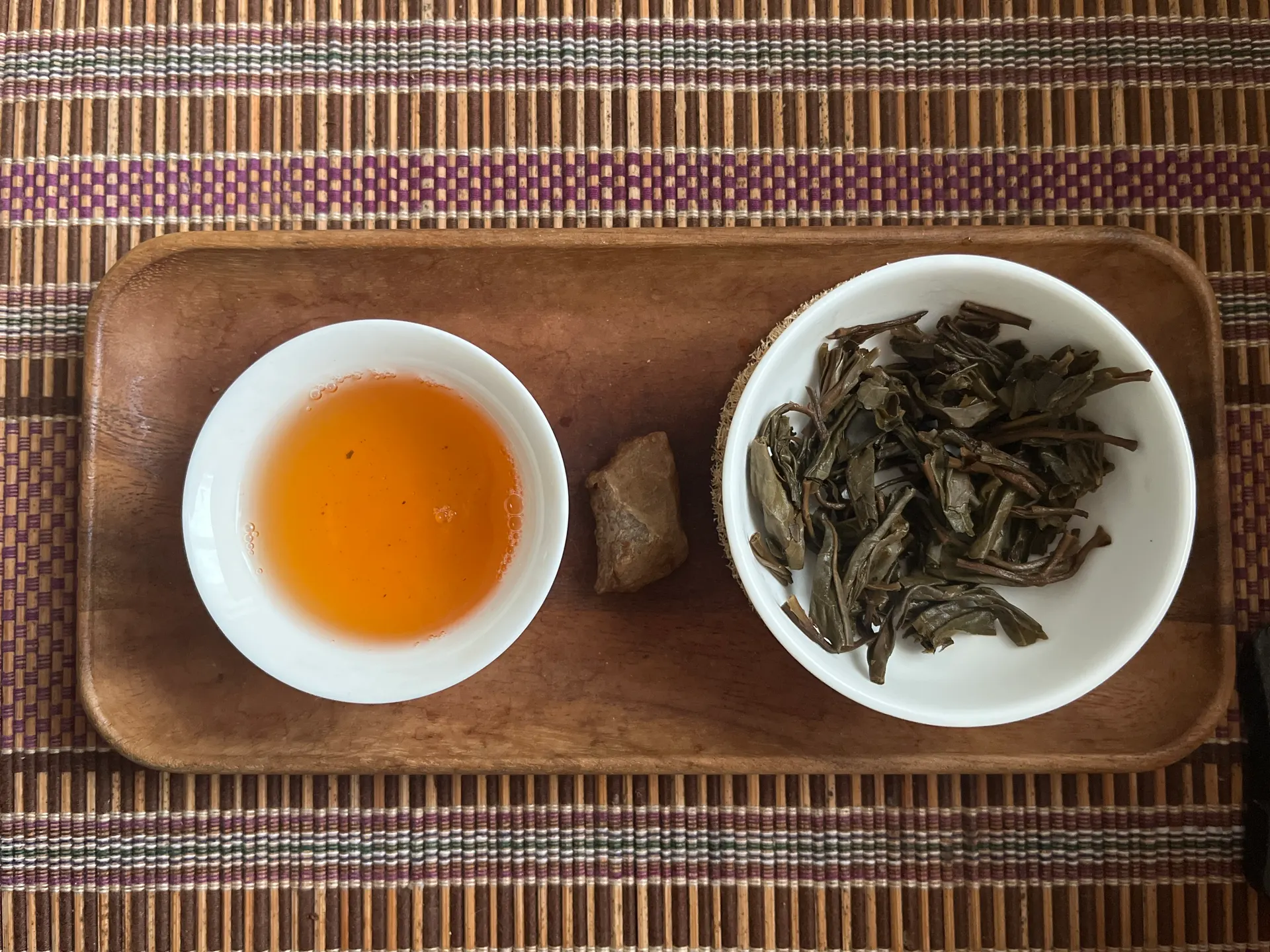
2015 ZSL Walong
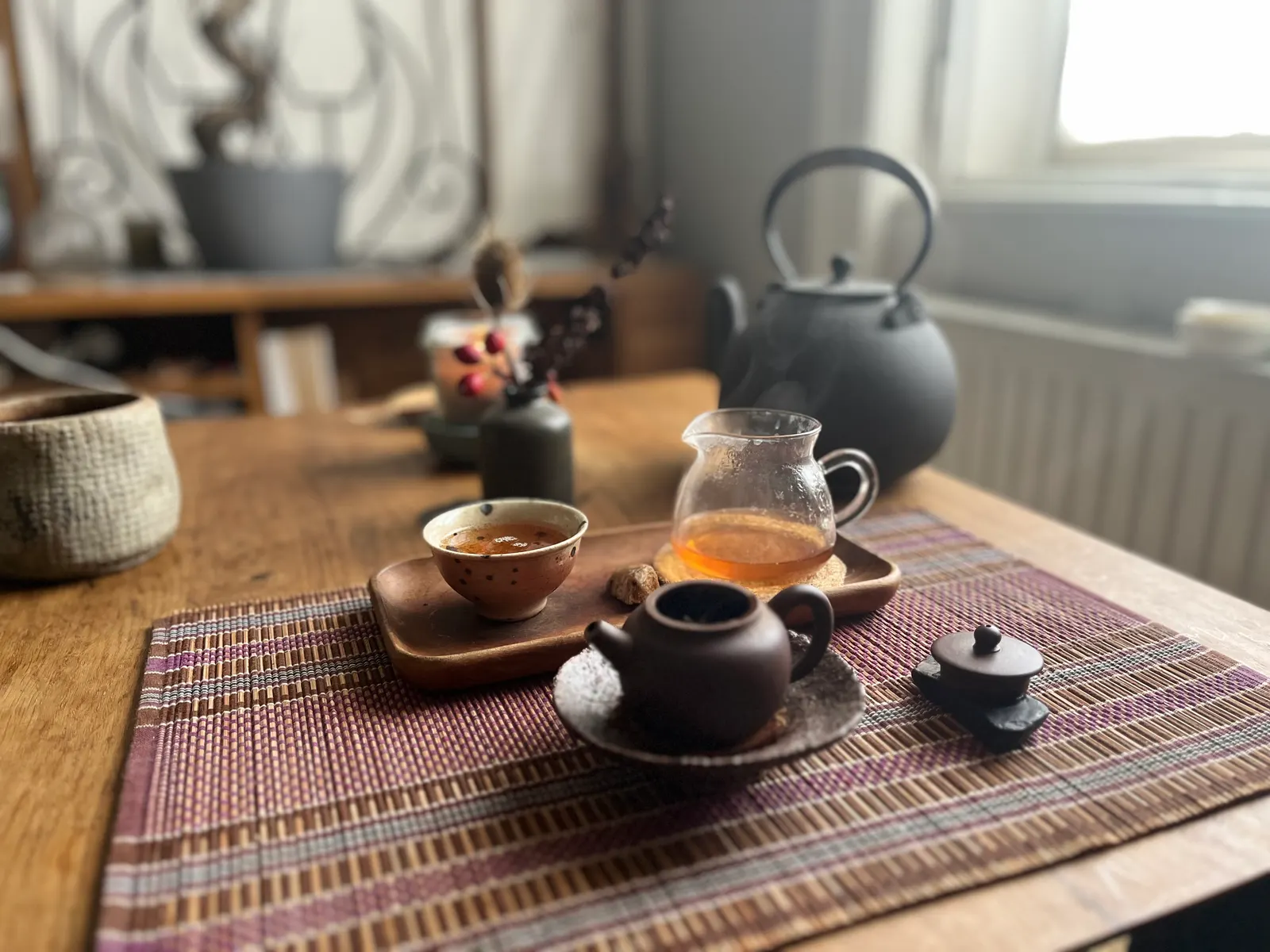
2025-12-05
Looking through the cupboard I discovered yet another sample of this Walong. This morning I brewed it in the Zini, while muting some of the brighter flowery notes, it makes for a nice round mouthfeel.
First up I noticed faint herbal bitterness, together with a creamy texture and lovely sweet peachy aftertaste. After about 2 steeps the bitterness also recides a bit and leaves for a flowery, honeyed cup with gentle herbal notes. A very nice tea, especially with its aftertaste and feel. Right from the beginning I notice a very centering energy with a nice ‘grown up’ depth. Gushu leaves, according to the seller.
In the documentary accompanying the book Ancient Caravans and Urban Chic—a great read for anyone curious about Yiwu and Puer production—Zheng Si Long (ZSL) emphasizes the importance of verifying true forest material. Even in well-known regions, Gushu maocha is often blended with terrace tea, and terrace leaves may be sold as forest tea due to the substantial price difference.
After sampling various black teas last week, I was reminded how differently forest tea behaves in the body. Puer is much more about energy and sensation, and Gushu in particular has that centering quality that originally drew me into tea.
It’s good that this level of quality is now so easy to find in Europe, also thanks to producers like ZSL.