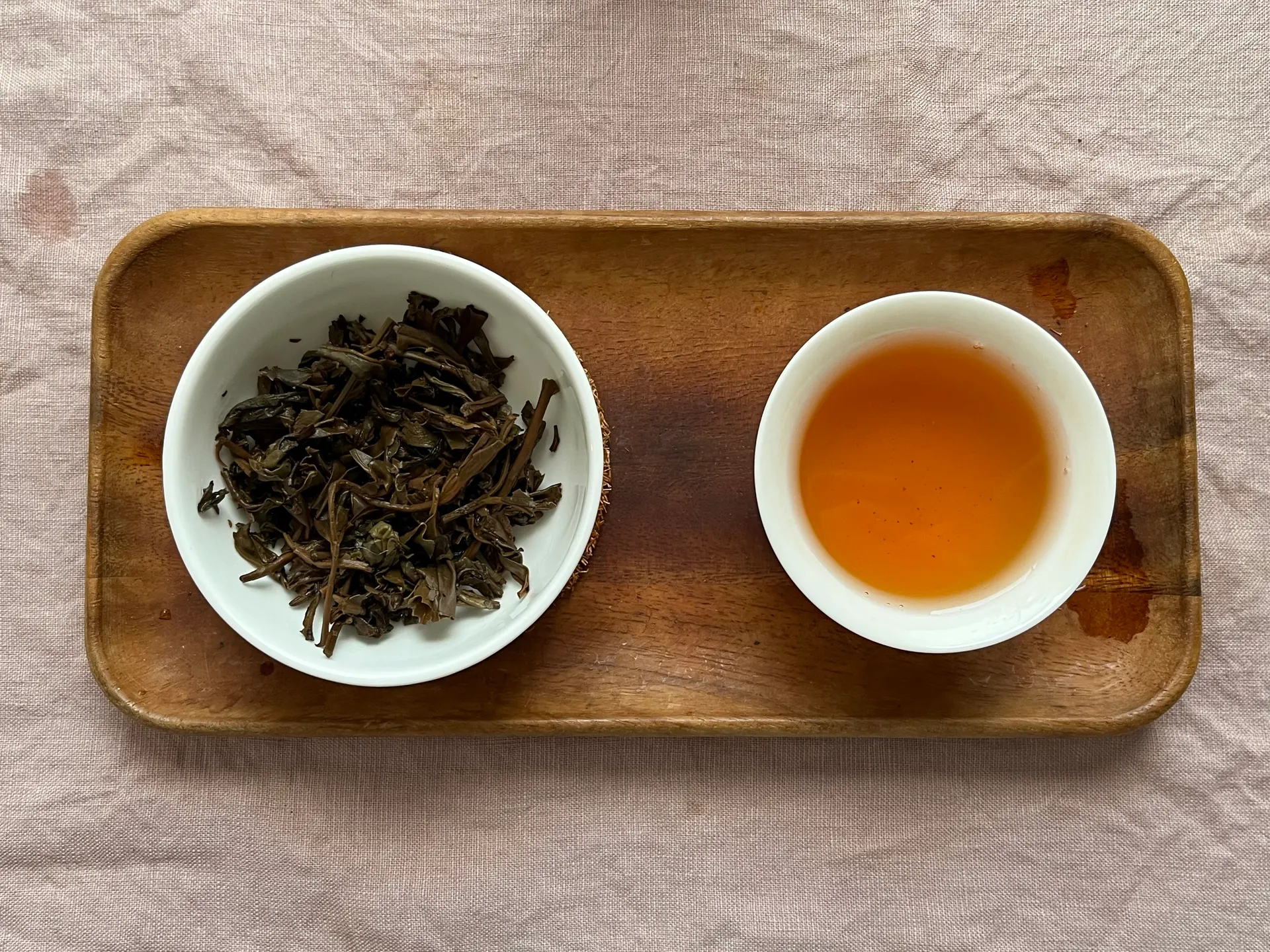
2006 Sipuyuan Seal Script Edition
2026-01-25
I don‘t have much experience with Changtai yet. From what I understand, the Sipu Yuan line was pressed at their Jiangcheng-based factory, which focused on high-quality wild teas from the area.
The experience is: quiet.
Its a gentle one, - there isn’t much development as the steeps progress, but it has such a soft quality that it’s quickly become one of my favourites.
Its a round cup, mouthwatering, with an aftertaste that sits surprisingly deep and lingers nicely, not very compley though. The overall feeling stays the same: gentle.
There’s essentially no bitterness, and with longer steeps it actually shows more of a soft depth.
So yes, very much up my alley.
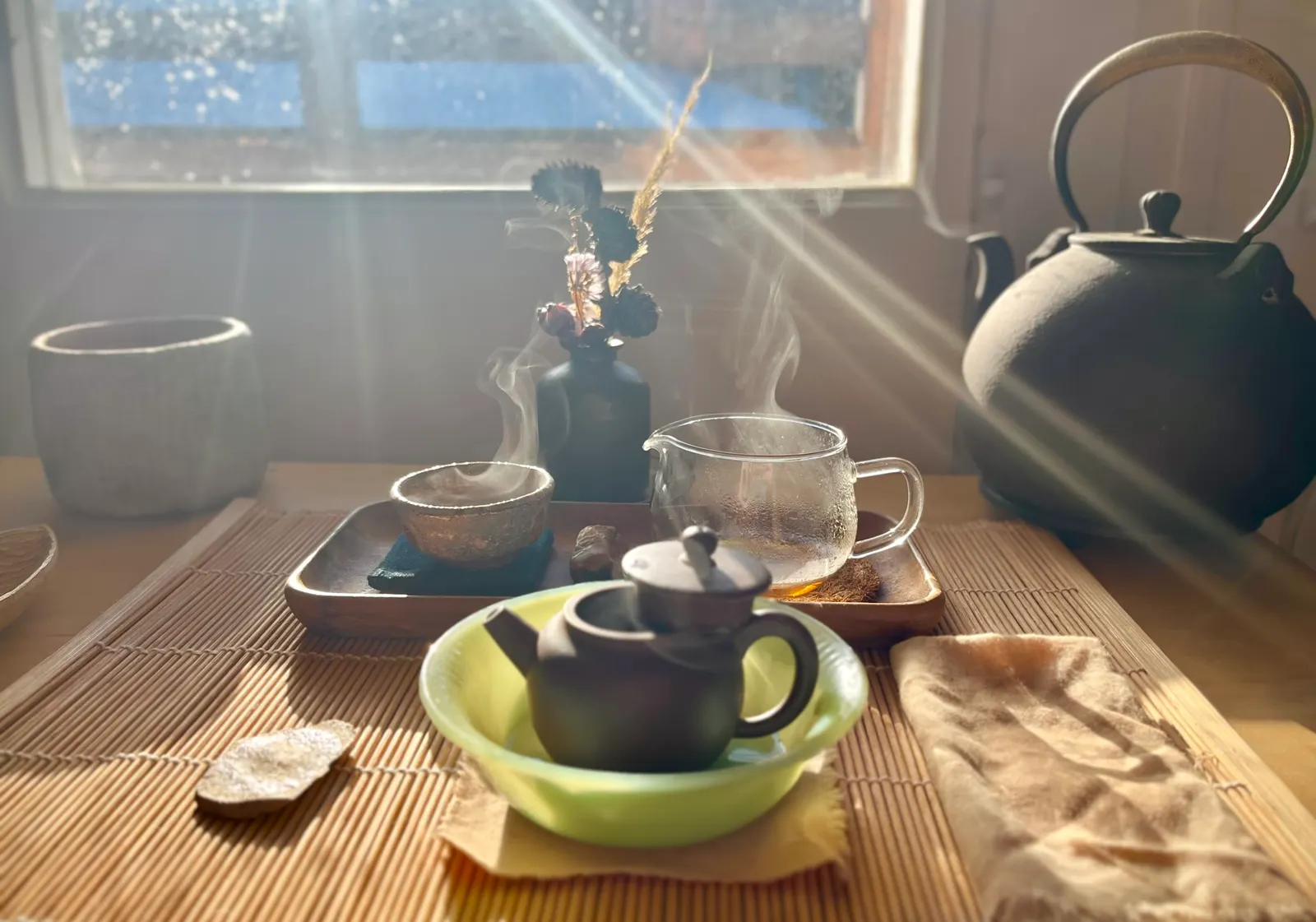
The Clay
There’s quite a big difference depending on the vessel. In the zini pot, the tea really leans into its strengths: it gets sweeter, rounder, and more “together,” with that sticky, comforting body and the brown sugar / honey kind of softness coming through clearly.
In a gaiwan (and even in hongni), it feels more exposed. The sweetness steps back, the body turns thinner and a bit more watery, and the profile shifts toward a slightly more herbal direction. That’s also where the small edges show up: a low but noticeable bitterness, and in the aftertaste a faint drying or astringent touch that zini mostly smooths out.
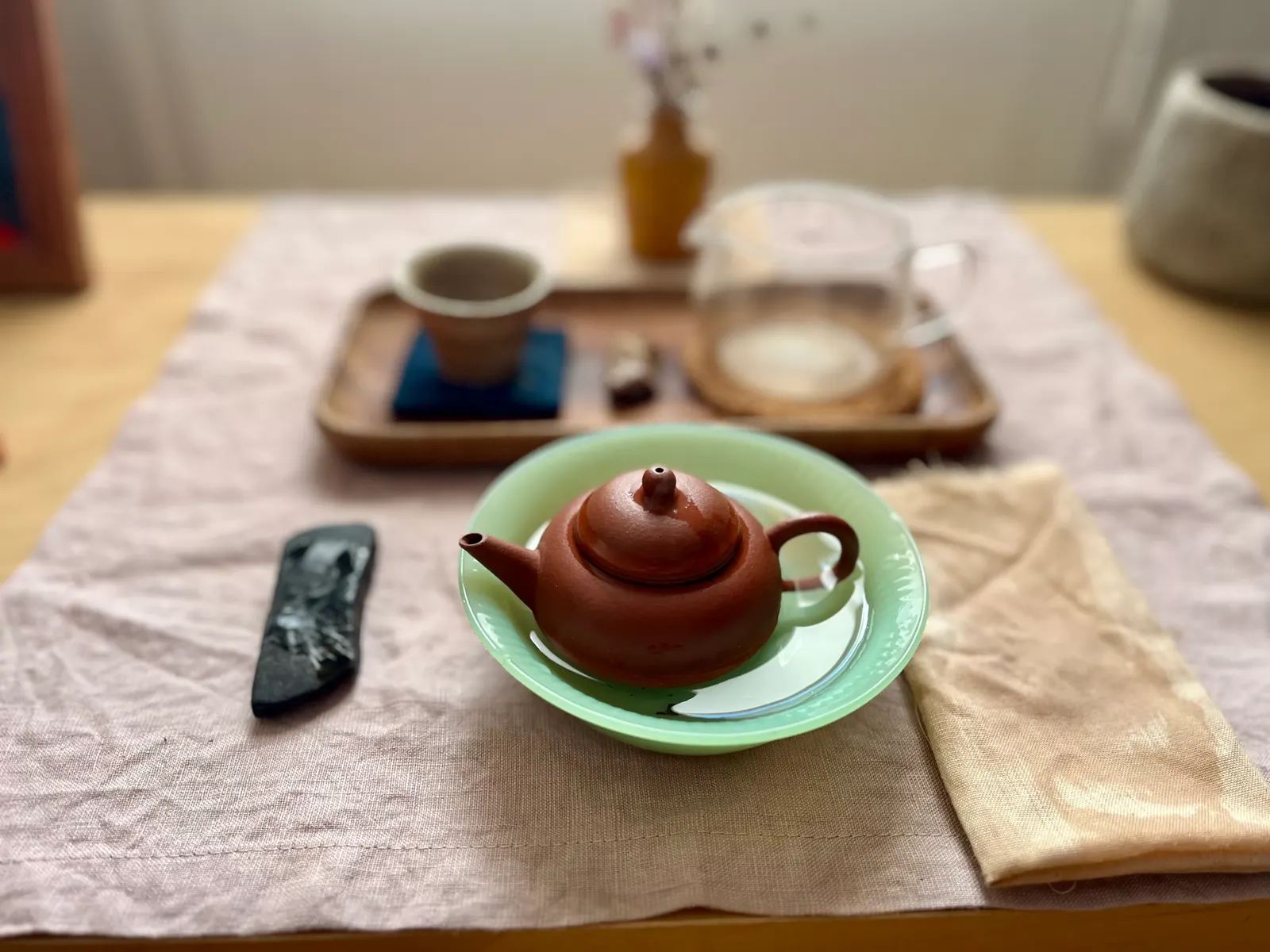
Hongni is interesting because it also highlights the brighter side - more stonefruit and a hint of citrusy tartness (grapefruit/pomelo), but overall it still puts the tea “under a light” rather than wrapping it in that mellow, integrated comfort that zini seems to give it.