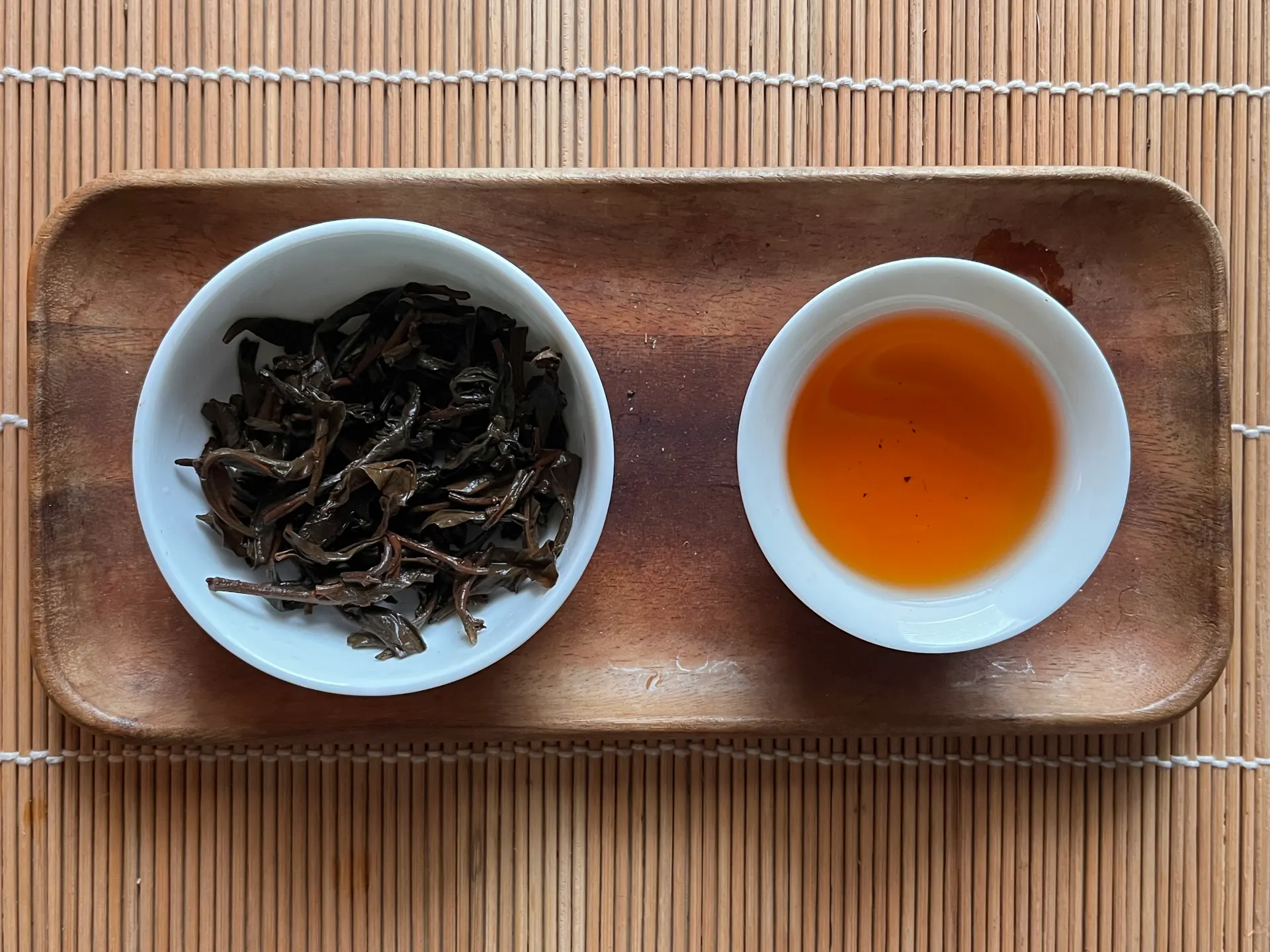
2004 Manzhuan
2026-02-04
When it comes to taste, it is similar to the other Bi Yun Hao cakes of the same age, like the Yiwu with its particular bright fruit “zestiness” that isn’t really my favourite. I usually prefer a rounder, thicker sweetness. I read somewhere that a lot of these cakes were wrapped in plastic for a long time, and I wonder if that’s part of why they come across as very dry-stored in taste, even though the leaf material looks really, really nice. The bright, fruity zestiness reduces a fair bit after some steeps.
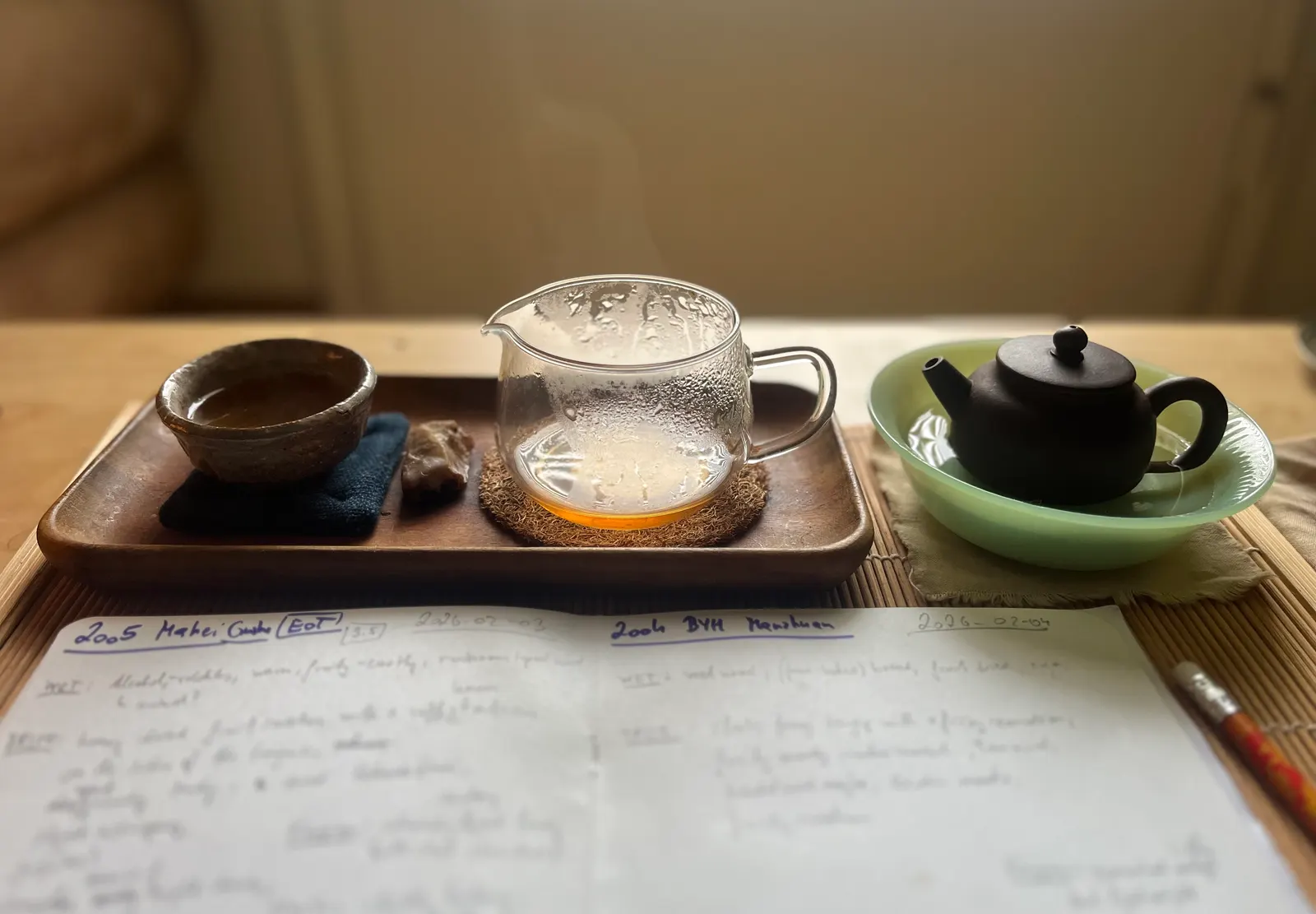
Quality-wise, it’s clearly very good, and the energy is amazing. It’s deeply comforting and has vertical depth to it. The throat rhyme is cooling, with a moist feeling and the aftertaste is long and lingering, with layered sensations and good salivation.
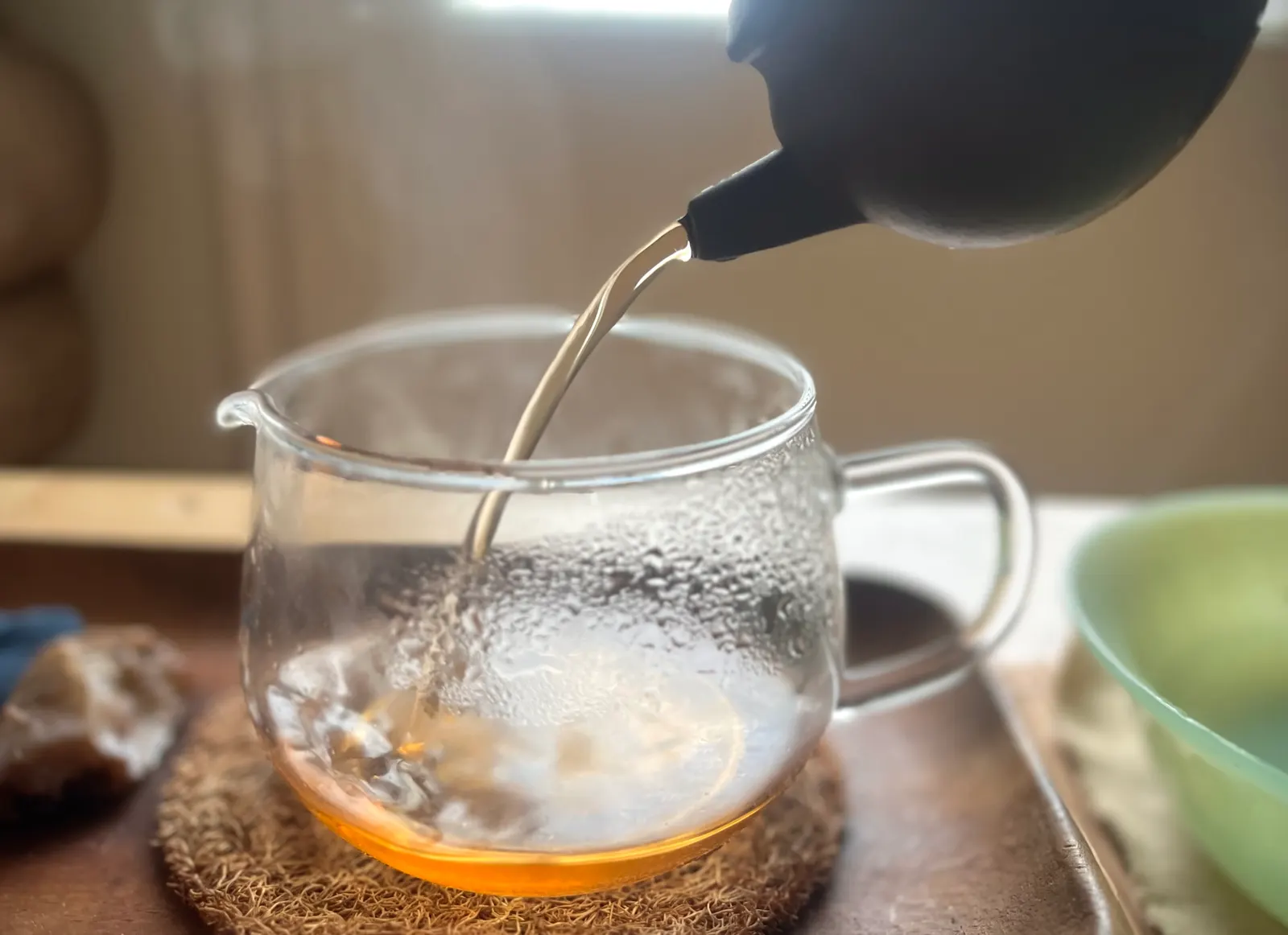
Rating it purely by quality and energy, this one would star high, but taking the taste in account, I would give it a lower rating due to my preferences there.
2026-03-02
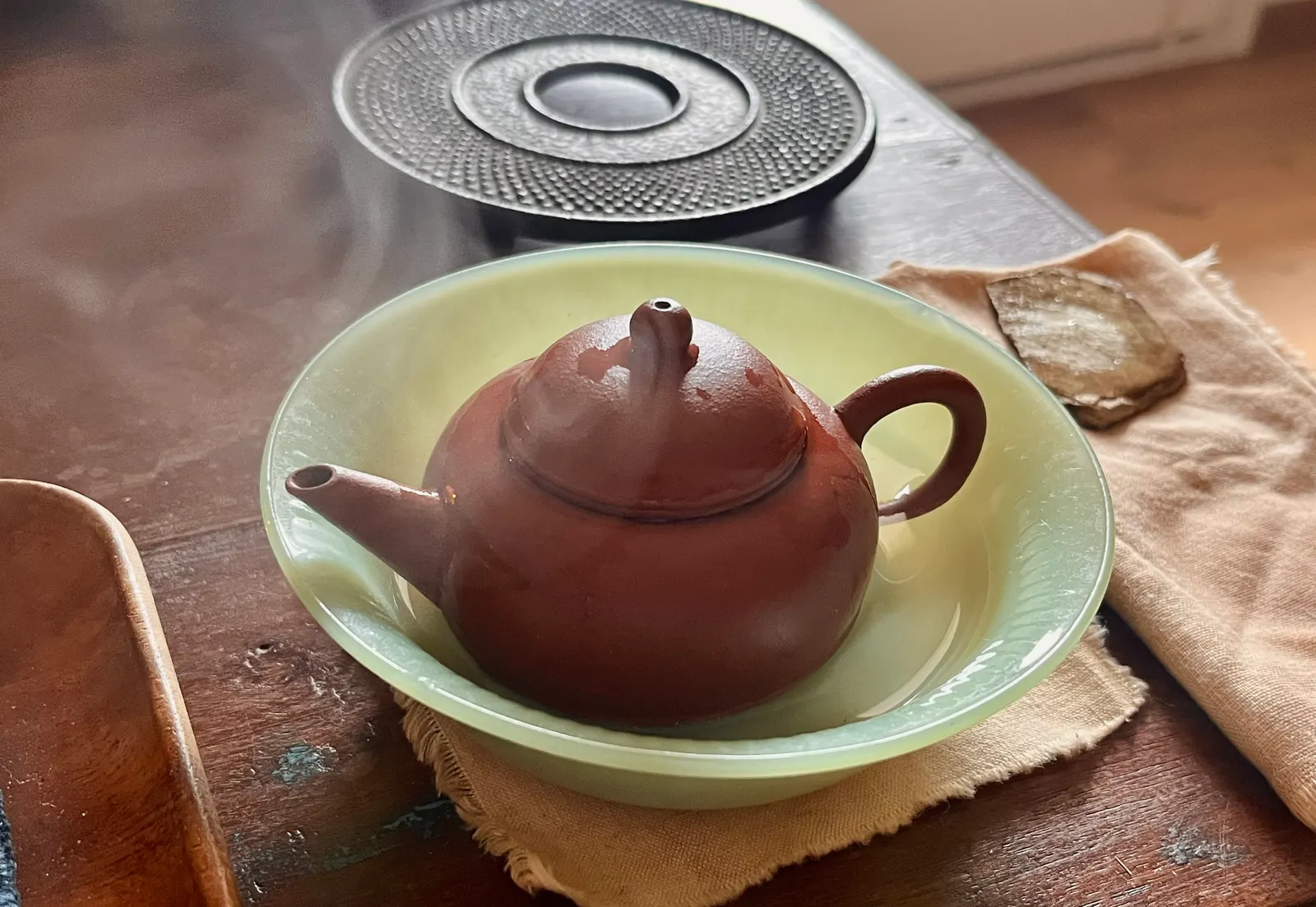
I went back and tried another sample of this tea, and this time I used different clay - a Hongni pot instead of my dear Chen Yu Fang Zini. Surprisingly, the tea became quite a bit more enjoyable like that. I’ve noticed this before: the Zini highlights some of those zesty notes a bit more than other pots, even though in theory it should be more rounding.
In the Hongni today the taste feels more balanced, and you can really tell this is good quality base material that has been cleanly aged. Just like the first time, the energy is great with this tea.
There’s a nice aged, woody cabinet note. Still, it’s a little too tangy for me, but for someone else this could be a top choice.