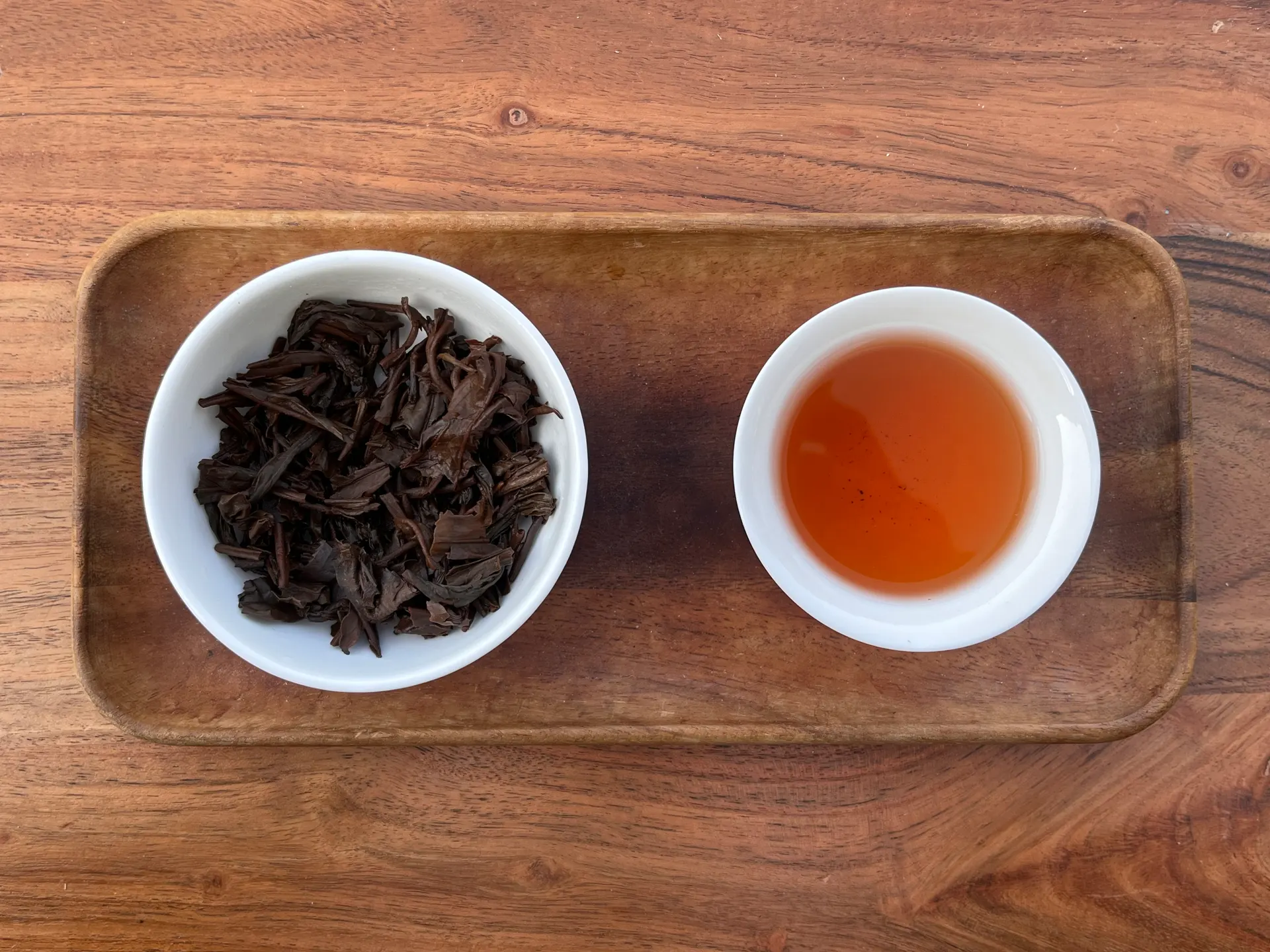
2004 CNNP 7542
2026-03-07
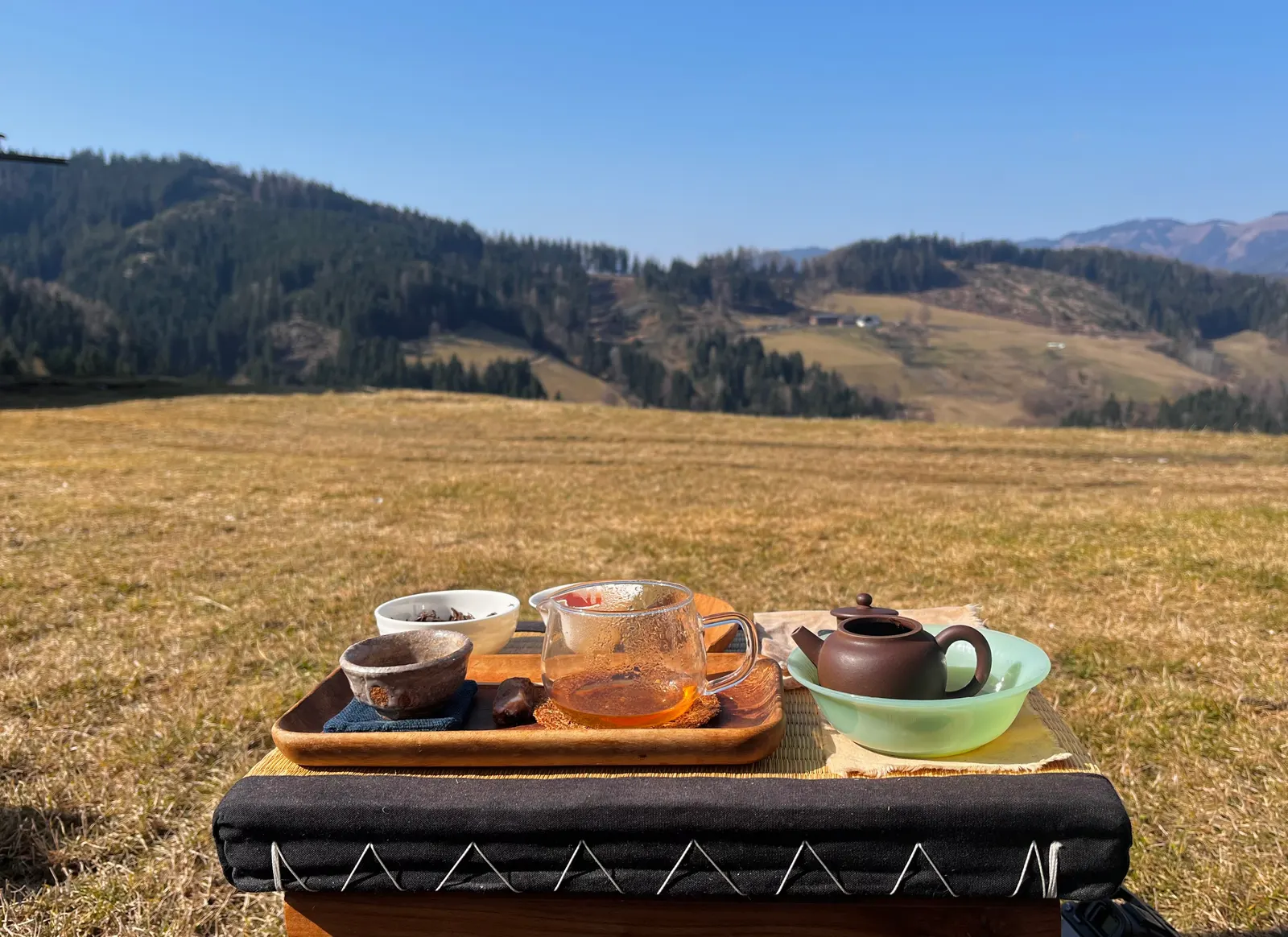
Outside, in front of the house. Tea often just feels (or even tastes) different when drinking outside, for some reason, so take it with a grain of salt;)
In the session starts reminiscent of an old wooden cabinet and layered notes of grain, dark molasses, a little fruitiness that comes and goes with a slight sourness in the early steeps.
The qi is present but not deep. Noticeable in the body, a gentle warmth, but there's also something in the belly that's just a touch off. You can feel that it's a blend, with good complexity in the aroma, while most edges have been rounded out by time. Storage tastes clean.
A solid daily drinker.
2026-05-10
Today in the tent in the front yard, rain crashing down, thunder rolling through the mountains. A good place to have tea:)

The Vendor stated that it tastes likely to be a Menghai Tea Factory Production though, the CNNP label usually says almost nothing - used by many different producers in that era, so you're never quite sure what's behind it.
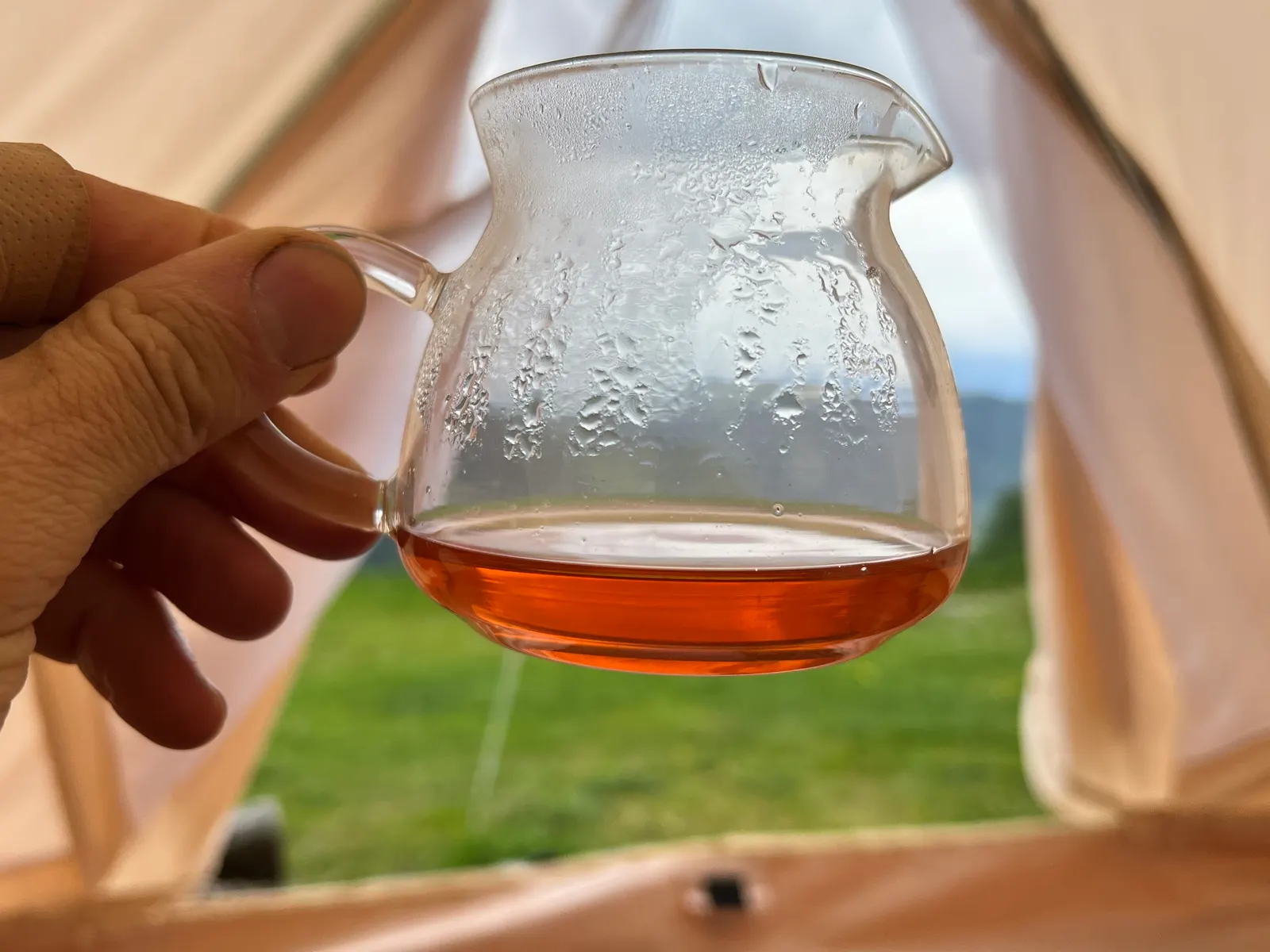
I've been going back and forth on vessels with these middle-aged teas. The Zini pot (Chen Yu Fang) is supposed to work well for something in this age range, but I keep noticing it seems to lean into the sourness and fruitiness - these teas already have that dry-storage brightness, and the pot isn't muting it the way you'd expect. A neutral gaiwan sometimes gives a cleaner read. - But I might as well be a bit sensitive to that type of tangy sensations.
2026-06-03
What surprising with this tea is that I often found it quite tangy. Today, not so. It comes out clean, woody fruity, but balanced in a good way. Surprisingly because still I’m using the same teapot that Zini pot. I did use a good looking piece of the sample, whithout broken bits or small pieces, which I suppose is what made all the difference.
Brings out more of an integrated and smoother feel, though it’s not as cleanly running down like some of them more modern productions that have a very water like HouYun, but the blend and the aging make up for that in a good way.